
Case Studies
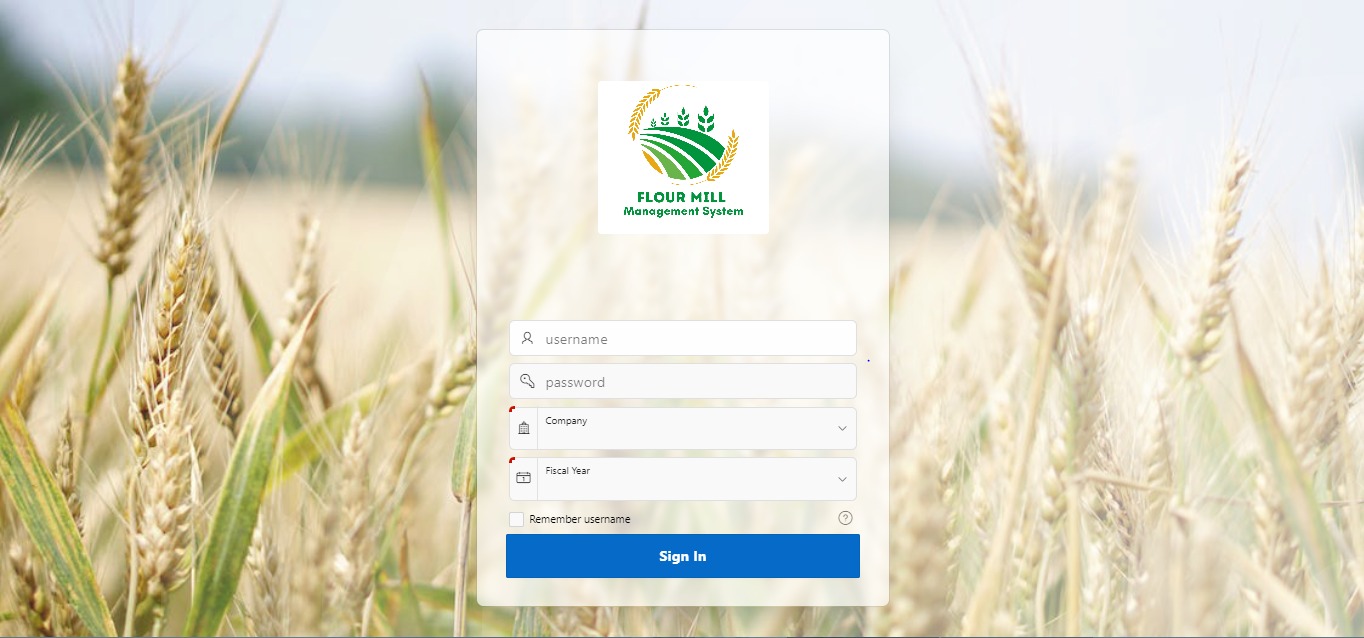
Flour Mills Management SystemA complete ERP solution for flour mills covering production, inventory, manufacturing processes, and financial accounting. It enables real-time tracking of raw material, milling output, cost control, sales, and profitability, ensuring operational efficiency and accurate financial reporting.

Services: Oracle APEX development
Solution: Cloud Migration
Industry: Flour Mills Production Unit
The Overview
The flour mill was operating on an obsolete Oracle Forms based environment that struggled to support modern business needs. Accounting processes were rigid and heavily dependent on outdated configurations, while production workflows followed legacy scenarios that no longer reflected actual operations on the shop floor. Stock calculations, from raw material intake to work-in-process, were performed manually, increasing the risk of errors & delays. Each financial year introduced further complexity, as the database schema user was changed annually. Financial year closing was handled entirely by the DBA instead of end users, who had little visibility or control. For every new fiscal year, a fresh schema user was created, and accessing previous year data required logging into a separate application with a different schema, fragmenting data and reporting. These & many other structural flaws resulted in inefficiencies, data silos and limited decision-making capability across the organization.

The Challenge
Replacing a flour mill’s legacy Oracle Forms environment involved several challenges, including outdated technology, limited documentation, and deeply embedded business rules. Redesigning the accounting chart of accounts required aligning modern reporting standards with existing financial structures. Migrating many years of historical data into a newly designed database schema added further complexity, as data inconsistencies, validation gaps, and performance risks had to be addressed while ensuring accuracy and uninterrupted business operations.
The Solution
To address these challenges, the legacy Oracle Forms 10g environment was carefully modernized into a robust Oracle APEX–based solution using a phased, risk-controlled approach. Business logic was reverse-engineered, documented, and refactored to align with current accounting and reporting standards while preserving critical financial practices. The database architecture was redesigned to normalize historical data, improve validation, and optimize performance. Data migration was executed in controlled stages with reconciliation checks to ensure accuracy and continuity, allowing day-to-day operations to continue without disruption. The result was a stable, secure, and future-ready system that seamlessly replaced the legacy setup.
- Performance and Stability
Optimized database schema, indexed critical tables, and refactored heavy Forms logic into efficient PL/SQL and APEX processes, resulting in faster transactions and improved system reliability. - Scalability
redesigned the application architecture to support growing transaction volumes and users, enabling easy feature expansion without impacting existing operations.
- Enhanced Security
Implemented role-based access control, modern authentication, audit logging, and secure session handling to meet current compliance and security best practices. - Seamless Migration
Performed phased data migration with validation, reconciliation, and parallel runs, ensuring historical data integrity and zero downtime for core accounting workflows.
The Results
The modernization delivered measurable improvements across performance, security, and operational efficiency while eliminating the limitations of the legacy Oracle Forms environment. The new Oracle APEX based system not only stabilized day-to-day accounting operations but also unlocked better reporting, faster decision-making, and long-term scalability, without disrupting the business during transition.
- Operational Efficiency Gains
Transaction processing became significantly faster, manual work was reduced, and finance teams experienced smoother daily workflows with fewer system interruptions. - Improved Financial Visibility
The redesigned chart of accounts and reporting structure enabled real-time insights, cleaner financial statements, and easier compliance with internal and external reporting requirements.
- Stronger Security and Control
Fine-grained access control, audit trails, and secure authentication improved governance, reduced risk, and ensured accountability across all financial operations. - Future-Ready Platform
The organization moved to a scalable, low-code APEX platform that supports ongoing enhancements, integrations, and growth, without the technical debt of legacy Forms and obsolete database architecture.